
Past workshop (2026 edition). This page serves as an archive of the completed event. It includes a brief overview of the workshop, key focus areas, and selected highlights from the sessions. Below you will find a curated set of photos that document the activities, interactions, and outcomes from the event.





EDTECH-DRIVEN INNOVATION IN THE PHYSICAL EDUCATION CURRICULUM
Workshop preview for PHASE China
MAY 16 - 17 2026 Shanghai
Technology is rapidly reshaping education, creating new possibilities for Physical Education and athlete development. This workshop demonstrates how movement can be measured, visualized, and systematically developed through digital tools, shaping a more modern, data-informed approach to PE.
THE PROBLEM
Physical Education assessment is still largely observational. Teachers often rely on simple tools to evaluate performance, making it difficult to objectively assess movement quality or track student progress over time. In many cases, assessment is based on basic manual recording. For example, in common activities such as rope skipping:
Typical assessment format includes:
* Student name
* Class / grade
* Time interval (e.g., 30s or 60s)
* Number of skips performed
While this approach is simple and easy to implement, it provides limited information about how a movement is performed. It does not capture individual differences between students, nor does it support deeper analysis of movement patterns or development over time.
Educational technology creates new opportunities to address these limitations. This limits both accuracy and the ability to support individual student development.
FROM OBSERVATION TO MEASURABLE MOVEMENT
The use of simple video recording, even from a mobile phone, allows movement in Physical Education to be captured and analyzed with much greater precision. By applying motion-tracking visualization, movement patterns such as rope trajectory, timing, and rhythm can be observed in ways that are not visible to the naked eye.
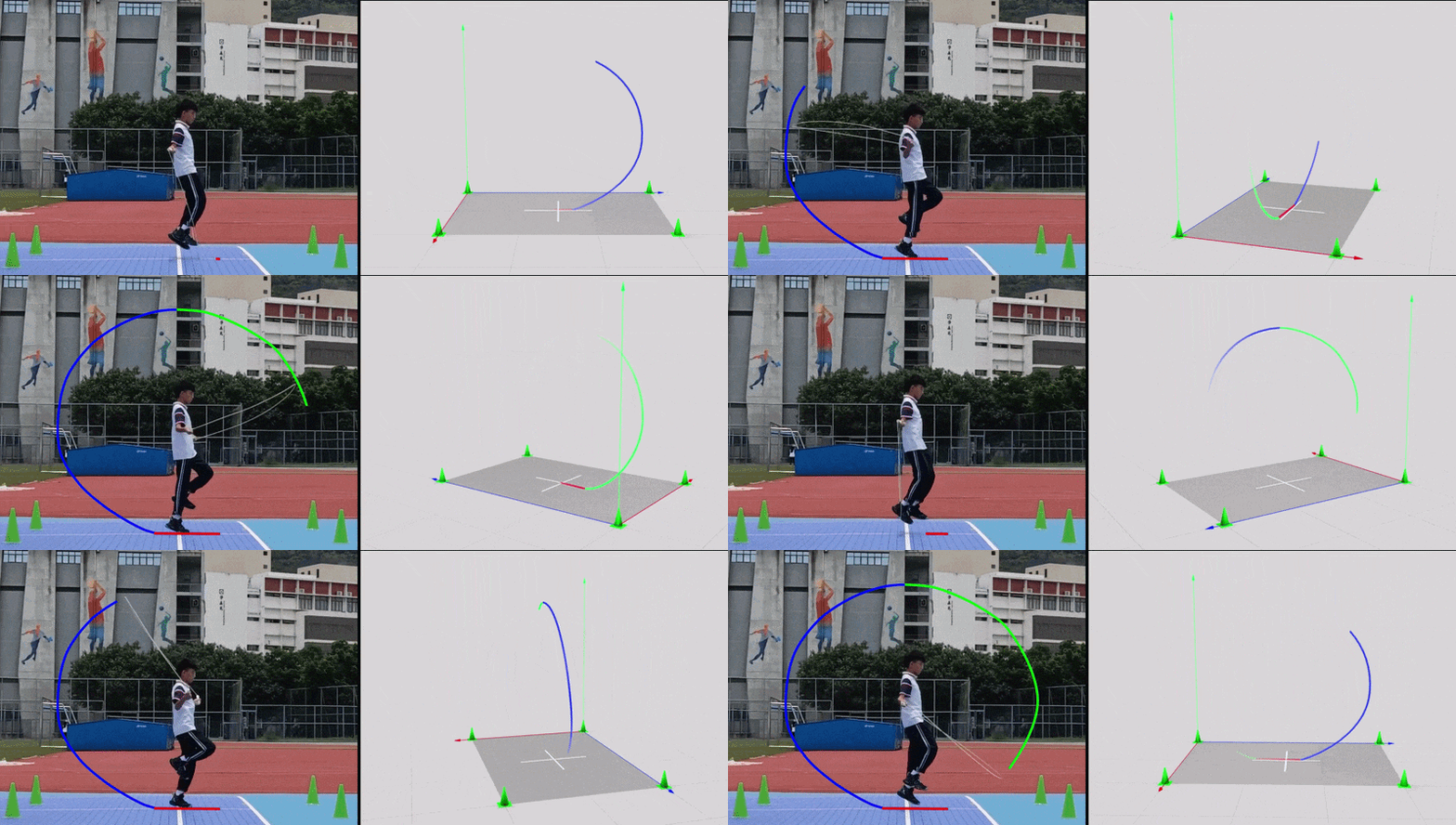
Visual 1 – Movement Visualization
Trajectory mapping provides insight into the consistency and efficiency of movement, offering a clear visual reference for both teachers and students.
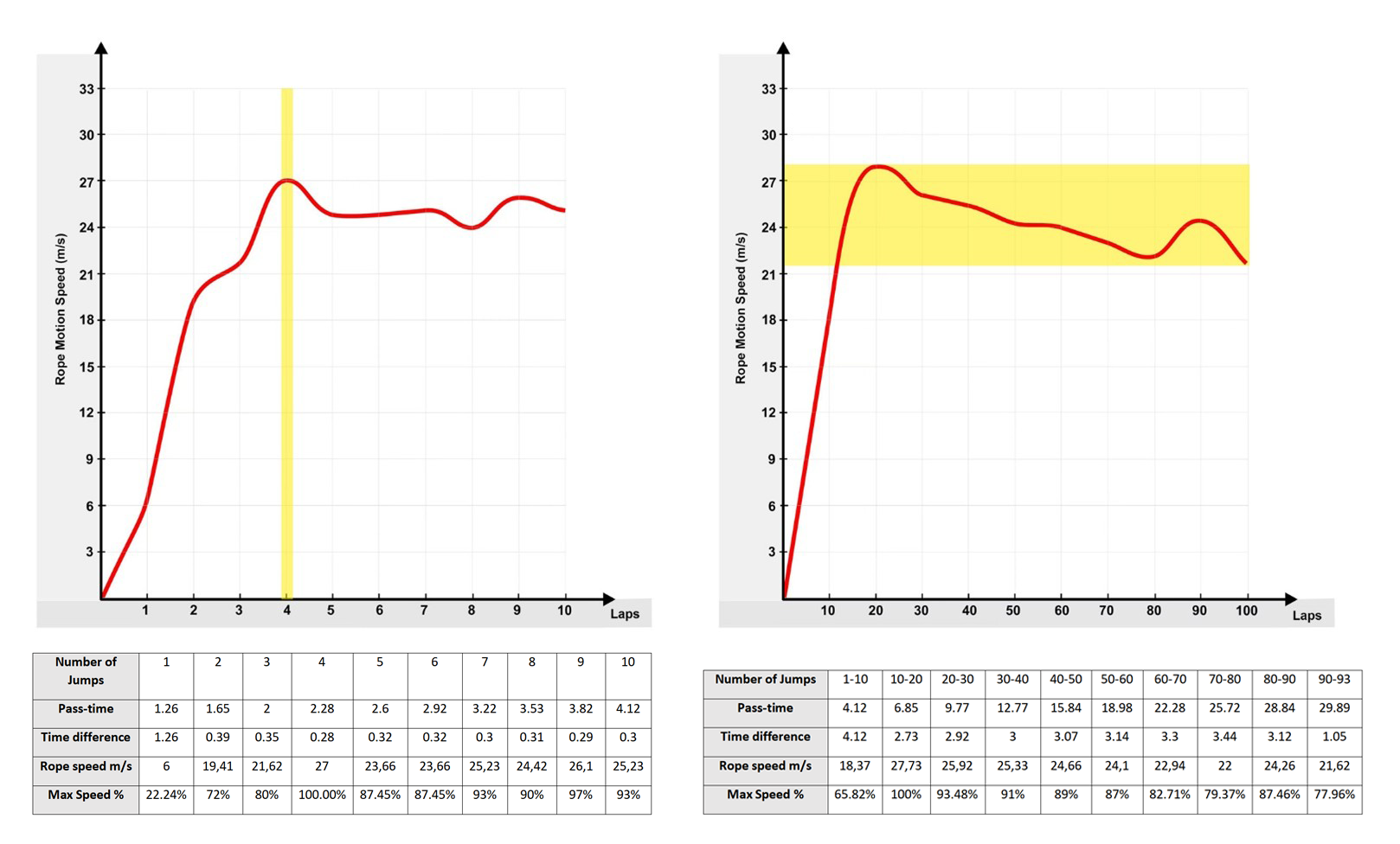
Visual 2 – Quantifying Performance
Digitizing movement allows performance to be translated into measurable data, such as rope rotation speed, maximum speed achieved, number of continuous repetitions, and changes due to fatigue, enabling a more structured and objective assessment process.
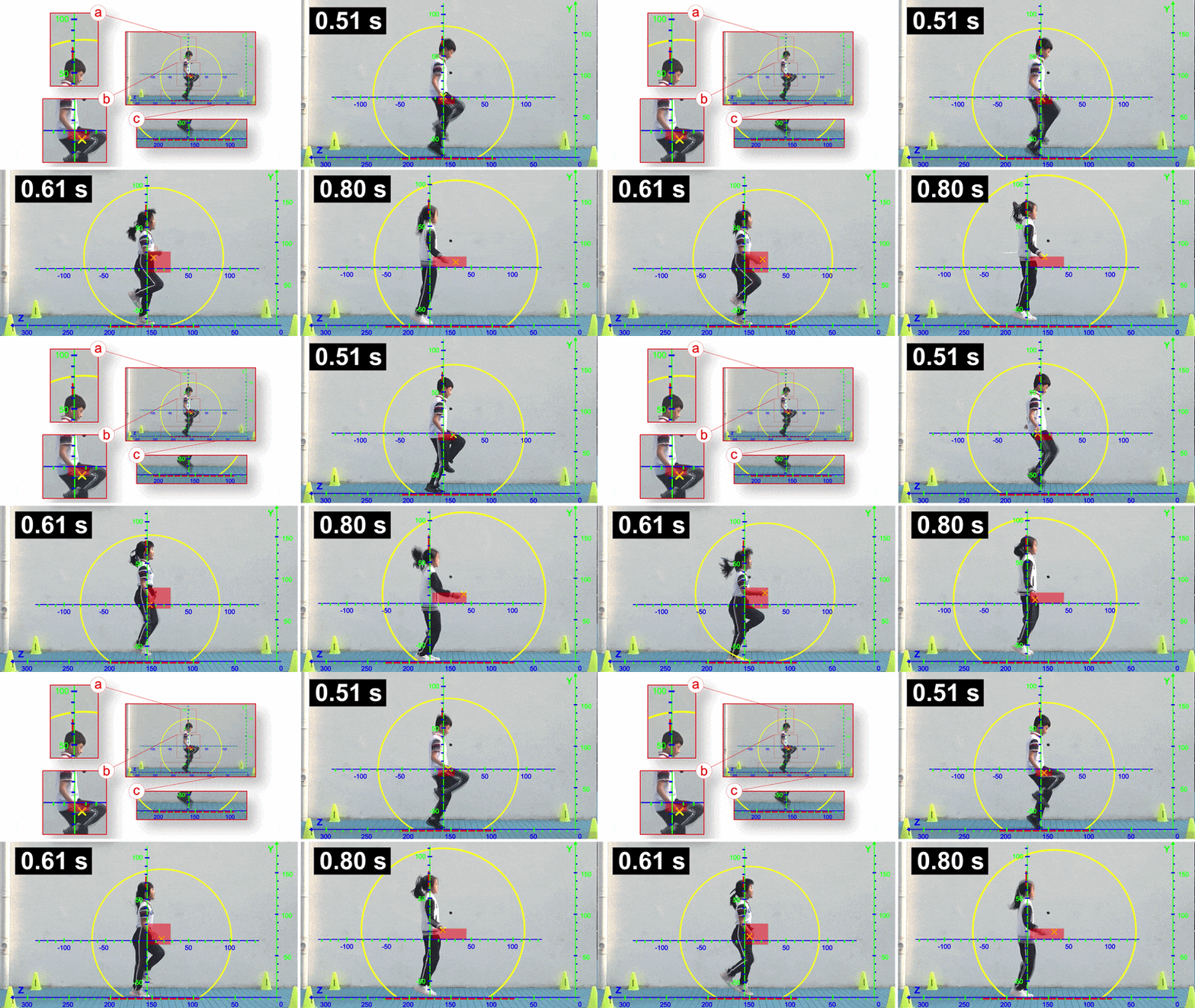
Visual 3 – Movement Quality Analysis
Beyond numerical results, motion analysis reveals differences in individual technique. Each student demonstrates unique movement patterns that directly influence performance outcomes. These variations can be identified, measured, and tracked over time, supporting more targeted feedback and correction.
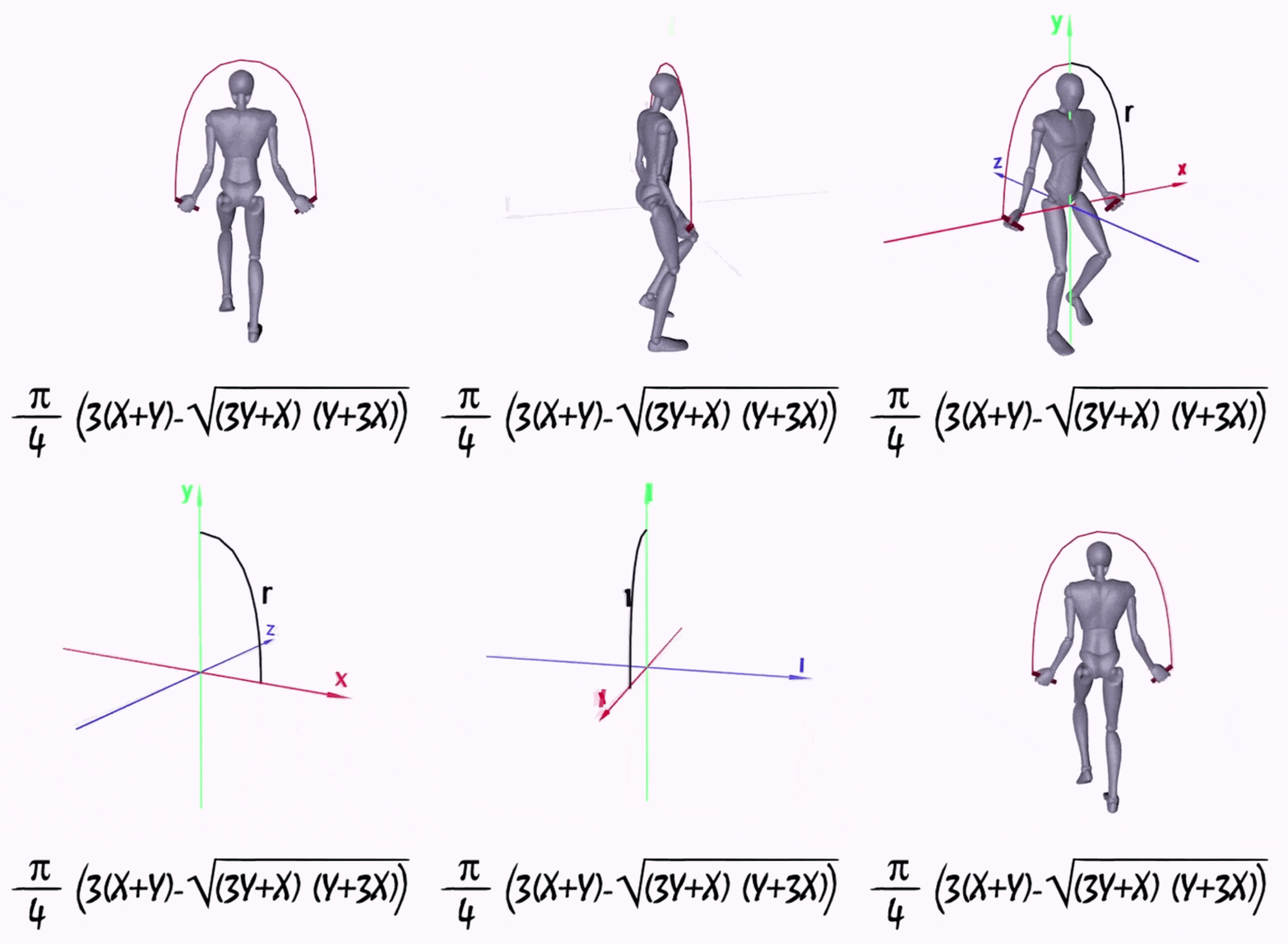
Visual 4 – Model-Based Understanding
Using mathematical models and 3D simulation, movement can be further analyzed and compared against optimized patterns. This allows a deeper understanding of efficiency, strengths, and areas for improvement.
These methods are already applied in real school environments, demonstrating that data-informed Physical Education is not a concept, but a practical and scalable approach. This shifts Physical Education from subjective observation to measurable performance analysis.
ALIGNING WITH NATIONAL STANDARDS THROUGH DIGITAL ASSESSMENT
Physical Education assessment in China is closely aligned with standardized testing frameworks. These assessments are traditionally presented through static diagrams and written criteria. By integrating digital tools, these same standards can be translated into dynamic, visual, and measurable models.
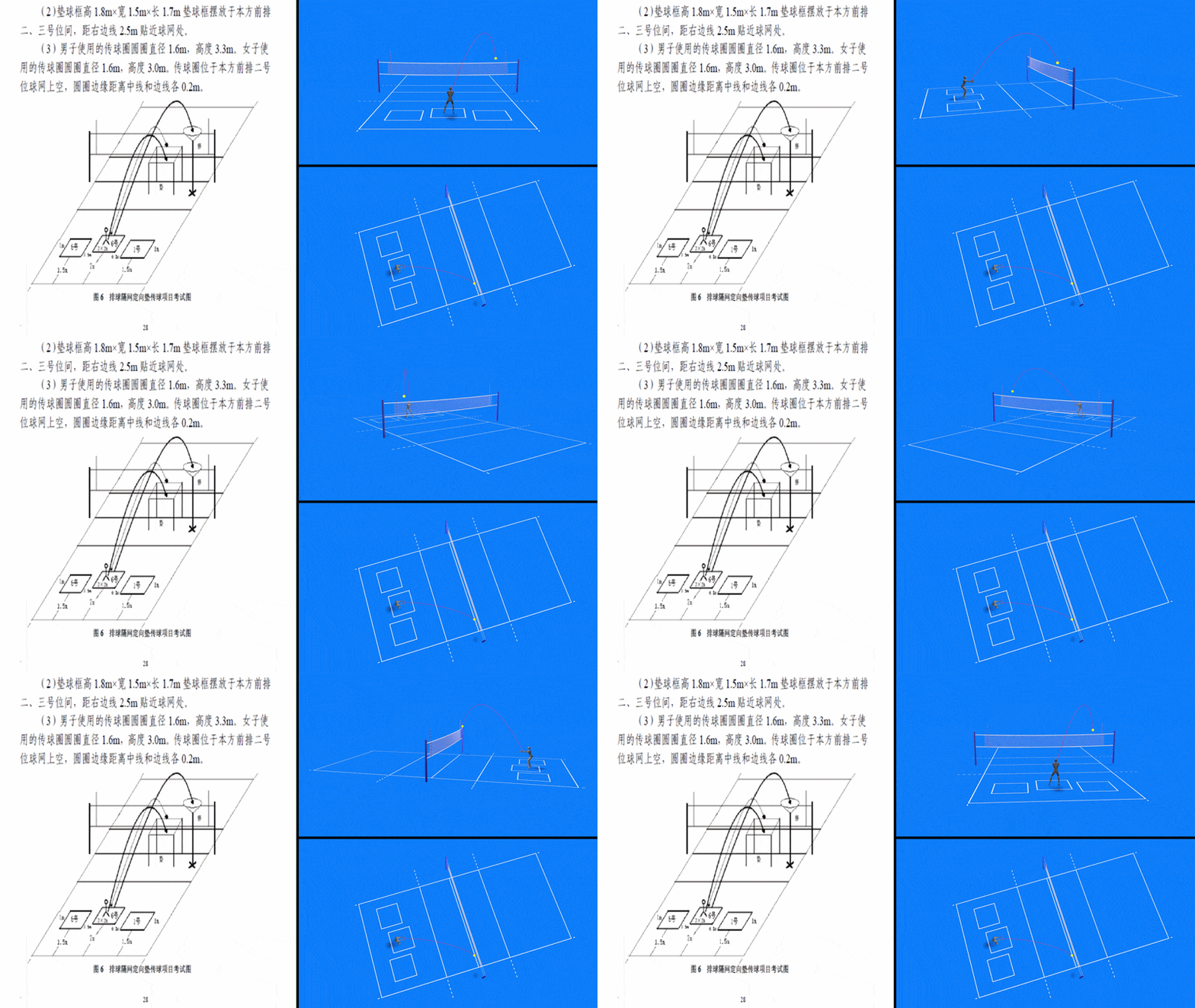
05 Visual - Translating PE Test Requirements into Digital Models
Movement trajectories, timing, spatial positioning, and performance thresholds can be clearly demonstrated and analyzed, allowing both teachers and students to better understand what is required—and how to achieve it.
A practical example of this approach can be seen in the digital breakdown of the 100-meter sprint assessment, where student performance is not only recorded as a final score but analyzed through structured movement data. This transforms assessment from a fixed requirement into an interactive system, supporting precise evaluation, targeted improvement, and consistent tracking over time (link). This creates a direct bridge between standardized testing and individualized performance development.
Such an approach enables schools to move beyond basic test preparation and develop structured pathways for students aiming to pursue future development in sport, effectively combining education, performance, and technology.
FROM REAL ENVIRONMENT TO DIGITAL SIMULATION
Real school environments can be accurately reconstructed into 3D simulations, where dimensions, spatial layout, and key reference points directly match the physical playground.
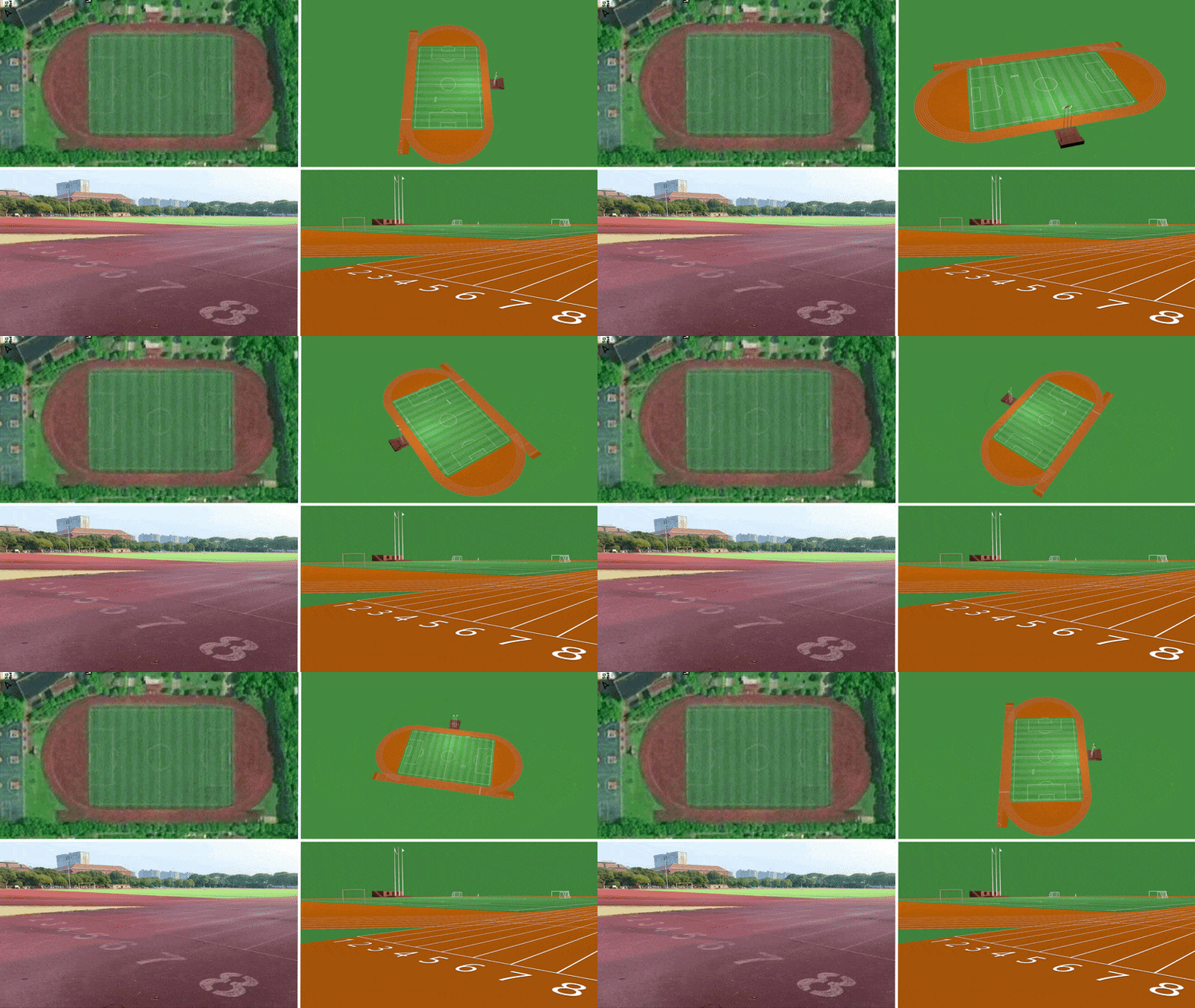
06. Visual - Environment Simulation Model
This allows lessons, assessments, and activities to be planned and tested in advance within a controlled digital environment before real-world execution.
WHAT YOU’LL SEE AND WHO IT’S FOR
This session is designed for Physical Education teachers, curriculum leaders, and school decision-makers interested in integrating technology into PE practice. Participants will see how PE activities can be transformed into structured, data-driven assessment models using performance metrics and visual feedback systems. Join the session to see how these approaches can be applied directly in school environments and adapted to your own teaching context.
https://phase.community/presentations/edtech-driven-innovation-in-the-pe-curriculum/