
By transforming ordinary video footage into 3D skeletal representations, movement can be reconstructed, visualized and examined beyond what is possible through conventional video observation.
This example demonstrates how the Centre of Mass (CoM) trajectories during running and walking can be extracted from video footage and compared in 3D space.
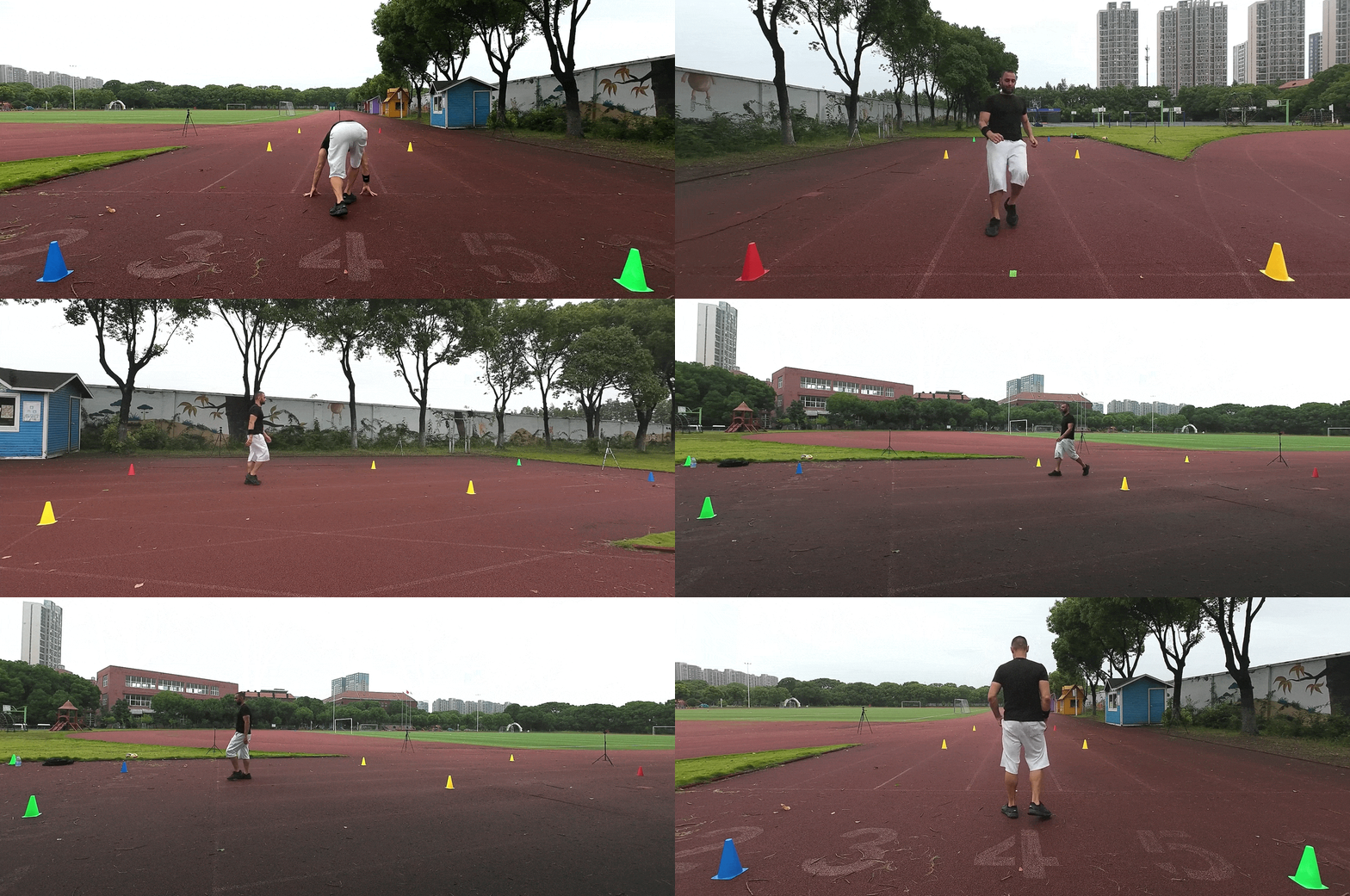
Visual 01. Multi-camera recording
Movement is recorded using multiple cameras positioned around a predefined capture area. Spatial calibration establishes the camera positions and coordinate system required for accurate 3D reconstruction.
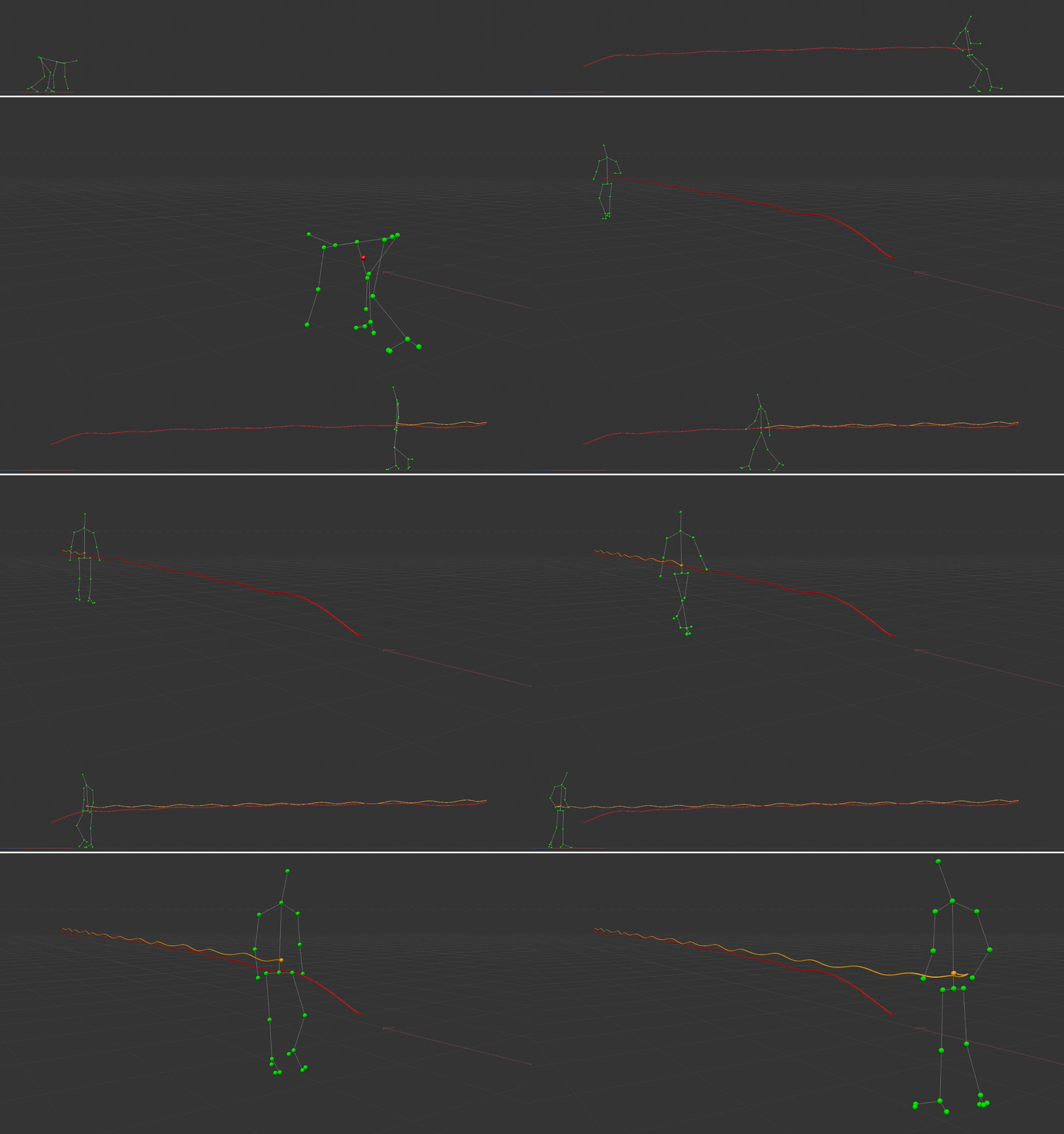
Visual 02. 3D reconstruction and CoM visualization
Following the extraction of XYZT coordinates from the recorded footage, a 3D skeletal representation is reconstructed. Based on the reconstructed body segments, the Centre of Mass is calculated and visualized.
The animation combines the reconstructed skeleton with the spatial path traced by the CoM throughout the movement. Red represents running, while orange represents walking. Side and perspective views are presented simultaneously, allowing the movement and its trajectory to be examined from different angles.
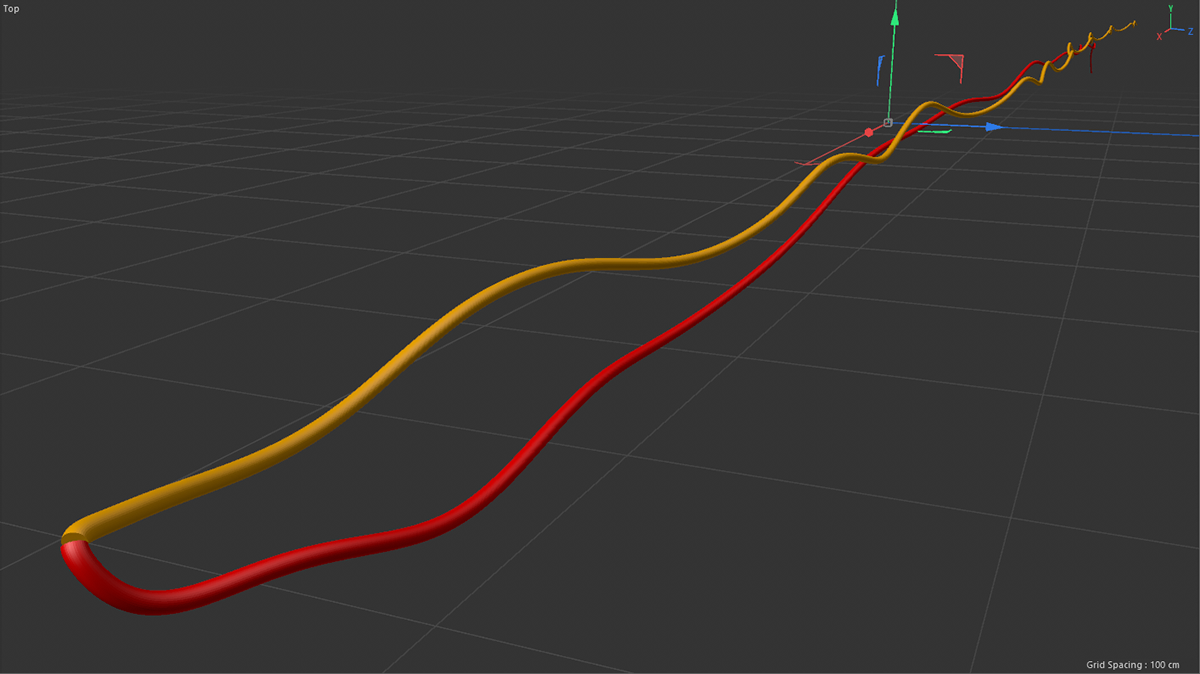
Visual 03. Perspective view
A perspective view of the complete CoM trajectory. The colour transition illustrates the change in movement pattern following the turn, as the subject transitions between running and walking.
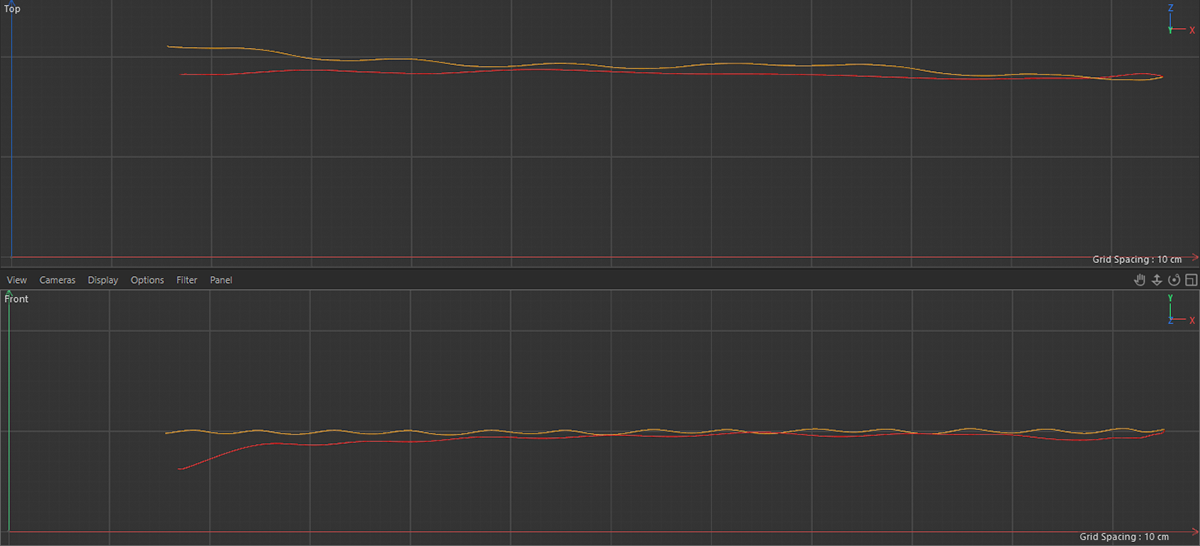
Visual 04. Top and side views
Two orthographic views showing the complete trajectory. The upper visualization presents the path from above (Top view), while the lower visualization shows it from the side.
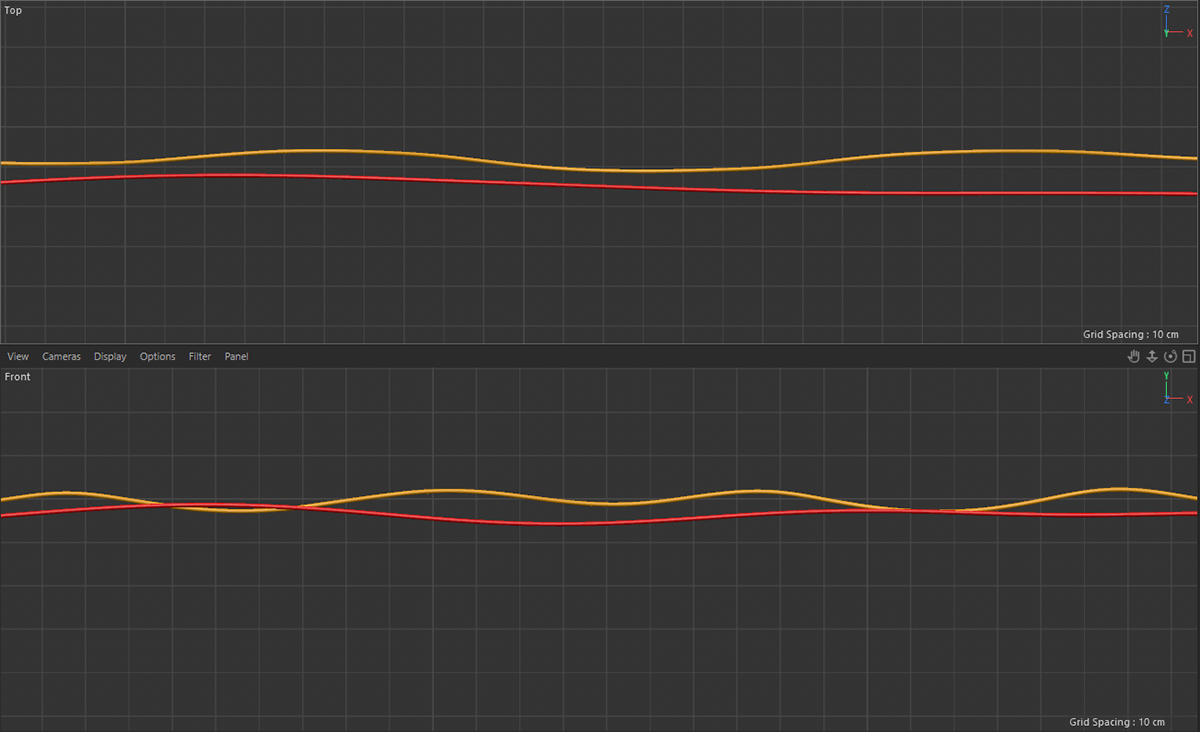
Visual 05. Detailed trajectory comparison
A closer view of the trajectory from the side, making differences and vertical deviations between running and walking more apparent.
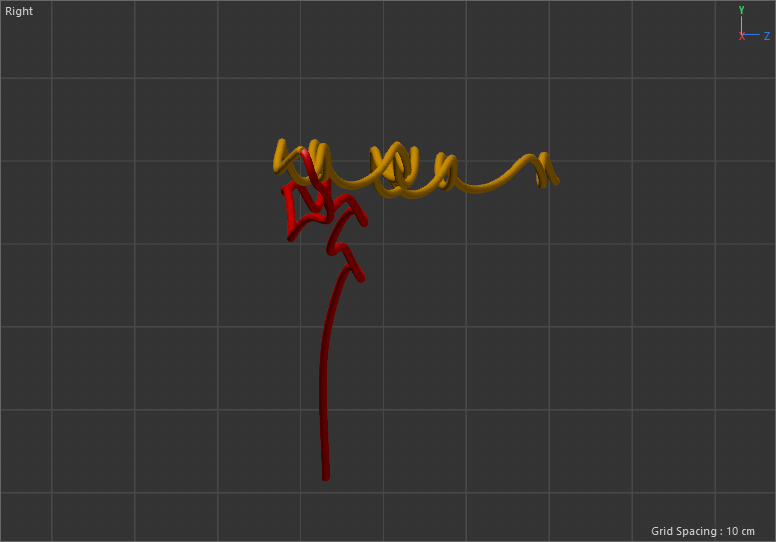
Visual 06. Front view
A frontal view of the trajectory the side where runing started and walking finished, providing another perspective for examining changes in the CoM trajectory.
Observations and further analysis
Several differences between the two movement patterns become apparent through visual observation.
In this particular example, the running trajectory exhibits fewer and smoother vertical oscillations, while the walking trajectory contains more frequent vertical variations.
The running trajectory also reveals changes in the vertical position of the CoM throughout the movement. At the beginning, the CoM follows a lower path. As running speed increases, its vertical position rises before gradually lowering again as the subject approaches the transition out of running.
Beyond visual observation, the underlying XYZT data allows these variations to be quantified and investigated further. Additional calculations can provide insight into movement characteristics, coordination, spatial displacement and other biomechanical parameters.
Making motion analysis more accessible
Professional 3D motion reconstruction and biomechanical analysis no longer have to depend on dedicated laboratory facilities.
Through multi-camera video recording, spatial calibration and specialized data processing, ordinary video footage can be transformed into meaningful 3D movement data.
This makes advanced motion analysis more accessible to coaches, sports professionals, researchers and educational institutions, without the infrastructure and costs traditionally associated with motion capture laboratories.